
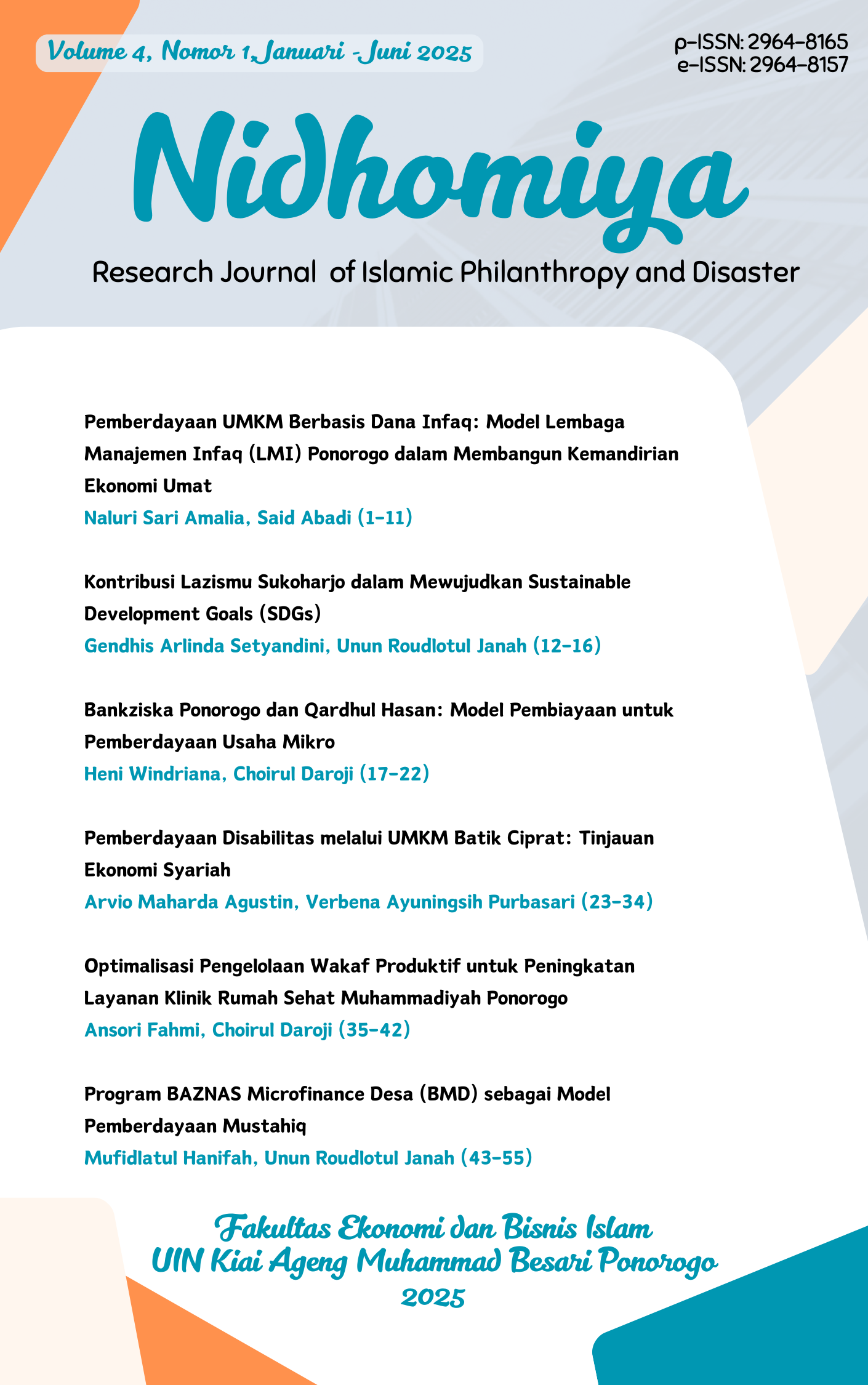
Kontribusi Lazismu Sukoharjo dalam Mewujudkan Sustainable Development Goals (SDGs)
DOI:
https://doi.org/10.21154/nidhomiya.v4i1.4621Abstract
The contribution of Lazismu Sukoharjo as an Islamic Philanthropic Institution in supporting the success of the Sustainable Development Goals (SDGs) through the implementation of prominent programs focused on improving community welfare, education, health, and economic empowerment. The background of this study is based on the strategic role of zakat, infaq, and sadaqah in poverty alleviation and promoting sustainable development, in which Lazismu Sukoharjo has implemented various initiatives such as the Beasiswa Mentari and Sang Surya, Peduli Guru, Pemberdayaan UMKM, Peduli Kesehatan, and Program Indonesia Siaga. The research approach use is descriptive qualitative with a field research study, through the collection of primary data from in-depth interviews with institution managers and beneficiaries (mustahik), direct observation, and document study. The research results show that the implementation of programs by Lazismu Sukoharjo has had a significantly positive impact on achieving SDGs targets, both through the productive distribution of aid and community empowerment assistance. However, this research also reveals supporting factors, such as synergy among stakeholders, policy support, and the use of digital technology, as well as several obstacles, including limited human resources and supporting infrastructure, which hinder the optimal implementation of the programs. In conclusion, the role of Lazismu Sukoharjo is very important in promoting sustainable development and poverty alleviation. Therefore, efforts to enhance internal capacity and strengthen cross-sector collaboration to the success of the SDGs.
References
Amymie, F., Yaya, Y., & Sadiah, D. (2017). Optimalisasi Pendayagunaan Zakat dalam Pelaksanaan Program Pembangunan Berkelanjutan (SDGs). Tadbir: Jurnal Manajemen Dakwah, 2(4), 417–434. https://doi.org/10.15575/tadbir.v2i4.669
Armida Salsiah Alisjahbana, Endah Murniningtyas. (t.t.). Tujuan Pembangunan Berkelanjutan Di Indonesia: Konsep Target Dan Strategi Implementasi.
Sari, A. I., Indrawati, D. L., & Si, M. (2021). Implementasi Sdg’s Dalam Menanggulangi Kemiskinan Di Kabupaten Temanggung. 2.
Sholawati, R., Fauza, N., & Zainuddin, M. (t.t.). Pengelolaan Dana ZIS Untuk Meningkatkan Kesejahteraan Mustahik Dalam Mewujudkan Sustainable Development Goals (SDGs).
Downloads
Published
Issue
Section
License
Nidhomiya allows the author(s) to hold the copyright without restrictions and allows the author(s) to retain publishing rights without restrictions; also, the owner of the commercial rights to the article.